
Service
AI agent development for products and operations
An AI agent is more than a chatbot: it reads a goal, decides which tools to use, takes steps through your systems and reports back. We design and build agents that do real work in production, with the retries, limits and human checkpoints that keep them reliable.
Who this is for
- Teams automating multi-step work such as support triage, lead follow-up, document handling or internal reporting.
- Founders adding an agent feature to a SaaS product.
- Operations teams replacing brittle scripts or RPA flows with something that handles messy input.
What you get
Agent design
The goal, tools, permissions, memory and hand-off rules written down before code, so everyone agrees what the agent may and may not do.
Tool and API integrations
Secure tool calling into your CRM, database, email, calendar or internal APIs, with least-privilege access and audit logs.
Evaluation suite
A test set of real cases and automated evals, so you can change a prompt or model and know whether quality moved.
Guardrails and human-in-the-loop
Input and output checks, approval steps for risky actions, and clear escalation to a person.
Observability and cost control
Tracing, token and latency tracking, and caching so the agent stays debuggable and affordable.
How we work
Step 1
Discovery
We map the workflow, the data it touches and what a good outcome looks like.
Step 2
Prototype
A narrow working agent on real examples, to prove the approach before we invest more.
Step 3
Build and evaluate
Production integrations, guardrails and an eval suite, tested against your real cases.
Step 4
Launch and monitor
Staged rollout with tracing, alerts and a review loop for failures.
Step 5
Improve
We use real usage to tighten prompts, tools and evals over time.
Technology we use
- Python
- TypeScript
- Node.js
- LLM APIs
- Tool calling
- MCP
- PostgreSQL
- Vector search
- React
Timeline
A focused first version is typically around 3 weeks of build, based on our estimator. Integrations such as authentication, payments or custom vector indexing add roughly half a week to a week each. Multi-agent systems and heavy compliance needs take longer, and we confirm in discovery.
Pricing
Every project is scoped individually after a short discovery call, so there is no one-size rate card. Use the homepage estimator for a realistic timeline first, then we agree scope and price together before any work starts.
Related work
FloStak AI
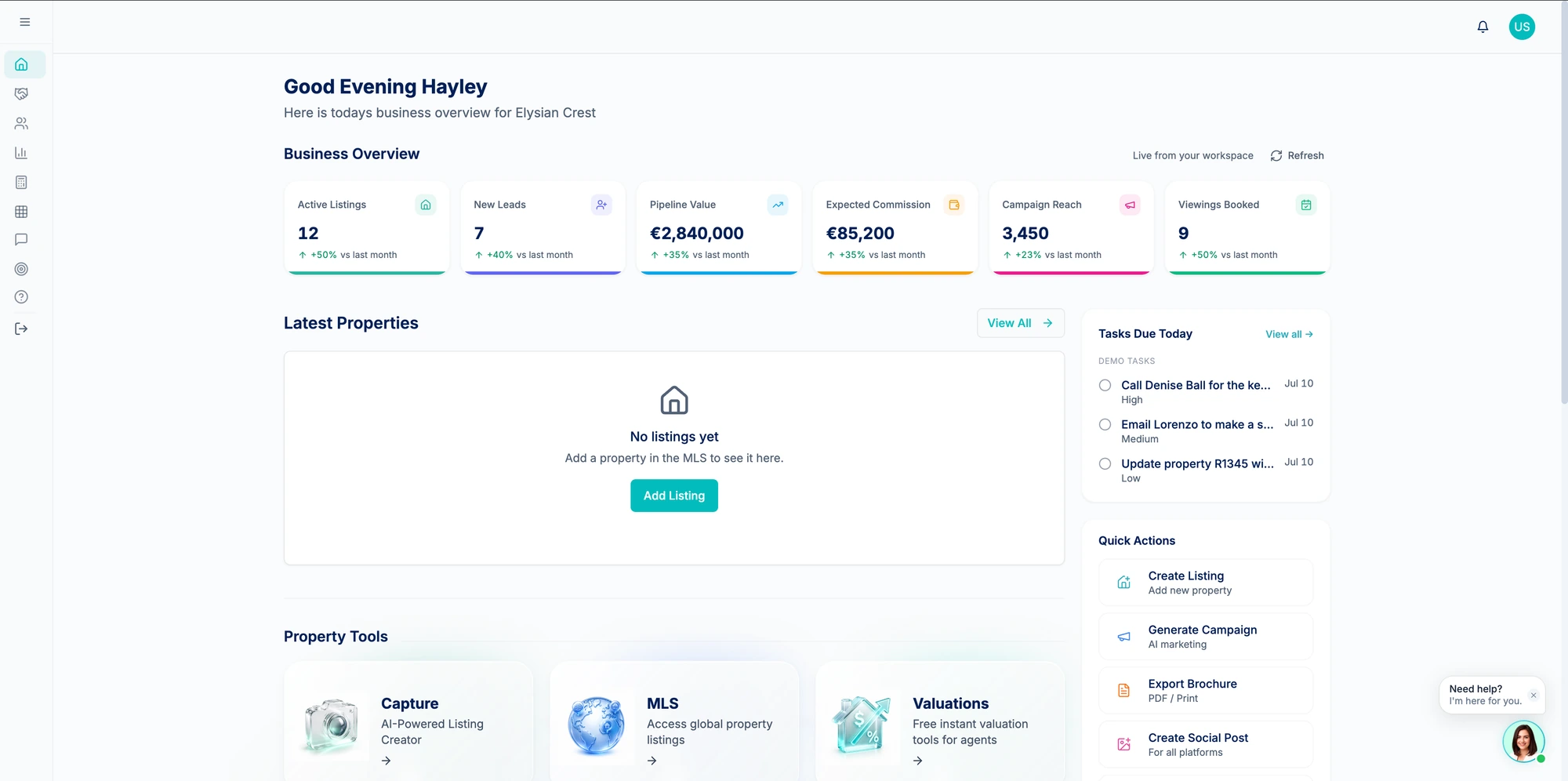
An AI-powered real estate marketing and CRM platform, pairing a full-stack React and Node.js dashboard with AI agents and retrieval-augmented (RAG) features.
Visit FloStak AI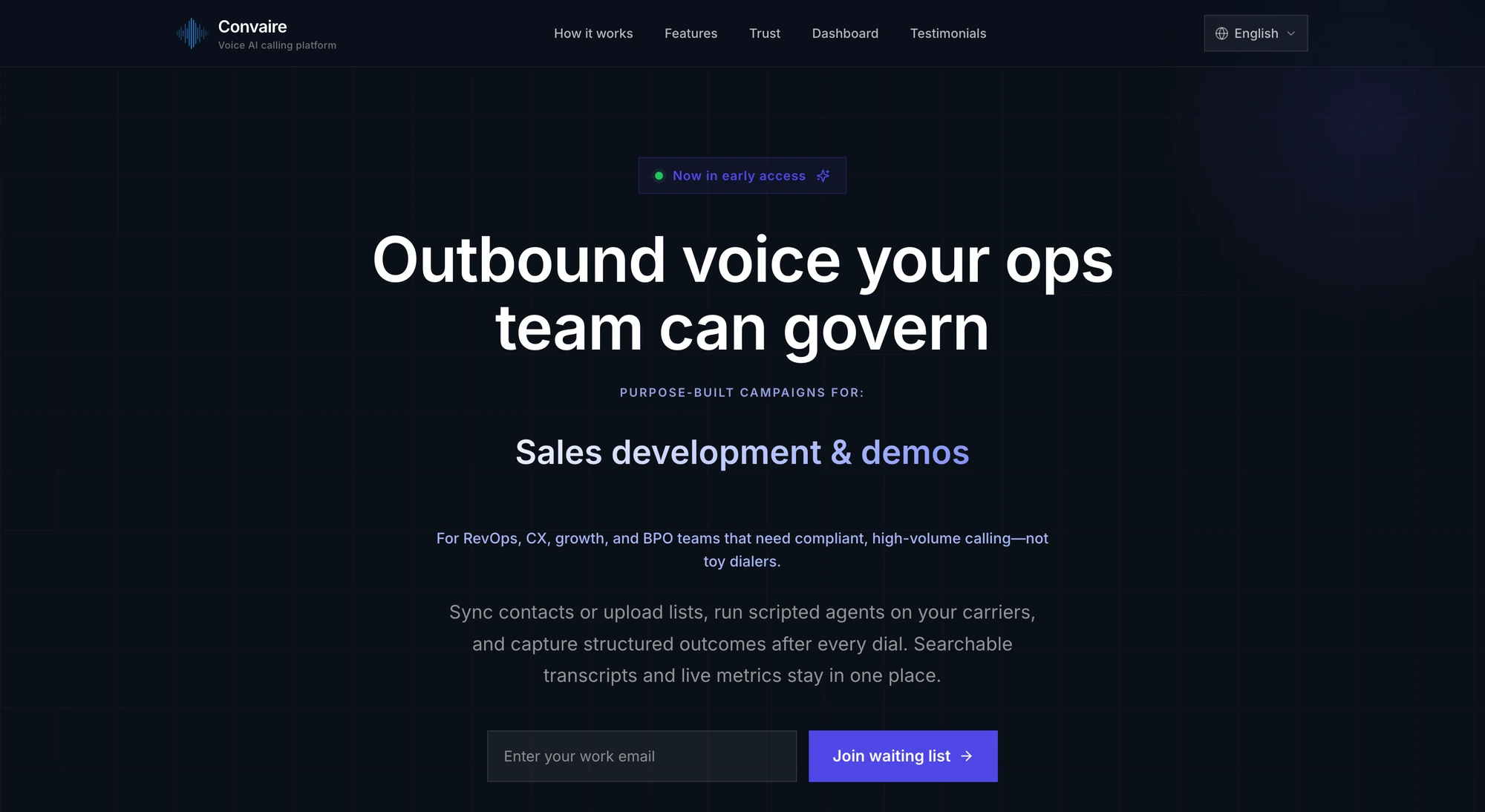
Convaire
A multilingual AI outbound voice platform for RevOps, CX, and growth teams, offering carrier-aware dialing, searchable transcripts, and live operations dashboards.
Visit Convaire
Frequently asked questions
What is the difference between an AI agent and a chatbot?
A chatbot answers messages. An agent pursues a goal across several steps: it decides which tools to call, acts on your systems, checks the result and continues or escalates. That autonomy is why agents need stricter permissions, evals and monitoring.
How do you stop an agent from doing something wrong?
We limit what each tool can do, validate inputs and outputs, require human approval for risky actions, log every step, and run an eval suite before and after each change.
Which models do you use?
We choose per use case on quality, latency, cost and data requirements, and design the system so the model can be swapped without a rewrite.
Can the agent work with our existing software?
Usually yes. We integrate through your APIs, databases or the Model Context Protocol, and fall back to browser or document automation when no API exists.
Who owns the code?
You do. We hand over the codebase, prompts, eval sets and documentation.
Related reading
- What Are AI Agents? Architecture, Tools and Real Use Cases Explained
- Building AI Agents With Tool Calling: A Practical Engineering Guide
- Making AI Agents Reliable in Production: Retries, Idempotency and Human-in-the-Loop
- Multi-Agent Systems: When One AI Agent Isn't Enough
- Building Safe AI Features: Guardrails, Prompt Injection and Data Privacy