
Service
RAG chatbot development grounded in your own data
Retrieval-augmented generation (RAG) lets a language model answer from your documents, help center or database instead of guessing. We build RAG chatbots and search assistants that cite their sources, say when they don't know, and are measured against real questions before launch.
Who this is for
- Companies with large knowledge bases, policies, contracts or product docs that people struggle to search.
- SaaS teams adding an in-product assistant or support deflection.
- Teams that tried a generic chatbot and got confident wrong answers.
What you get
Ingestion pipeline
Connectors that load, clean, chunk and refresh your PDFs, web pages, tickets or database content.
Retrieval you can tune
Embeddings, a vector store and reranking, plus hybrid keyword search where it helps.
Grounded answers with citations
Responses that point to the passages they came from, and decline when nothing relevant is found.
Evaluation and hallucination checks
A test set of real questions, retrieval and answer metrics, and regression checks on every change.
Access control and privacy
Per-user or per-tenant permissions so the bot never surfaces content someone shouldn't see.
Chat or search interface
A web widget, internal tool or API, built to match your product.
How we work
Step 1
Audit your content
We review what knowledge exists, how clean it is and who may see what.
Step 2
Build the retrieval layer
Ingestion, chunking and search, tested on real questions first.
Step 3
Add generation and guardrails
Prompting, citations, refusal behavior and safety checks.
Step 4
Evaluate
We measure retrieval and answer quality and fix the weakest areas.
Step 5
Launch and keep fresh
Deployment, feedback capture and scheduled re-indexing.
Technology we use
- Python
- TypeScript
- Embeddings
- Vector databases
- Reranking
- LLM APIs
- PostgreSQL
- React
Timeline
Based on our estimator, a focused RAG or AI build starts at around 3 weeks, with custom vector indexing adding about a week. Messy or fast-changing source content, strict permissions and multiple data sources extend that, and we confirm the range in discovery.
Pricing
Every project is scoped individually after a short discovery call, so there is no one-size rate card. Use the homepage estimator for a realistic timeline first, then we agree scope and price together before any work starts.
Related work
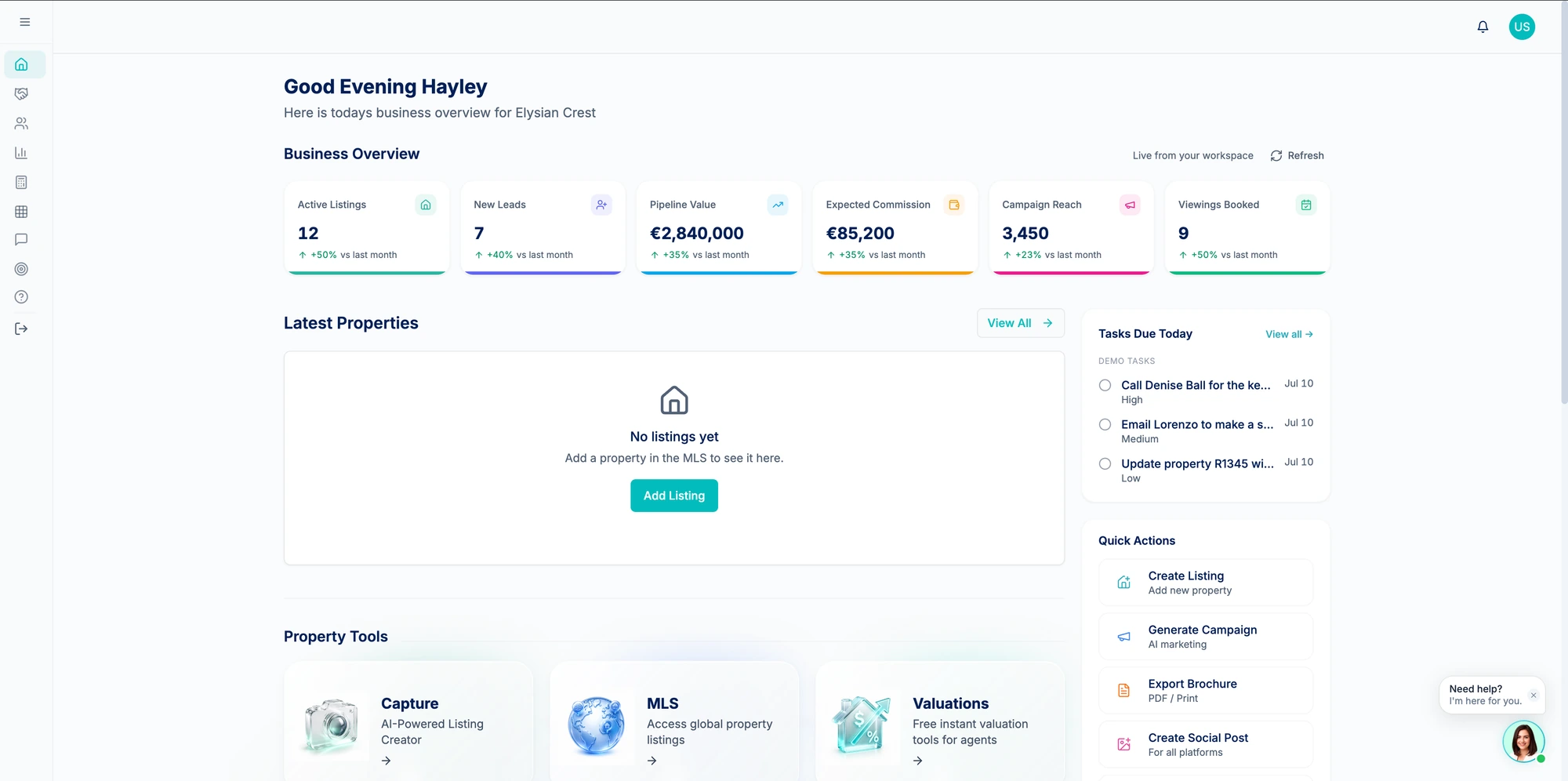
FloStak AI
An AI-powered real estate marketing and CRM platform, pairing a full-stack React and Node.js dashboard with AI agents and retrieval-augmented (RAG) features.
Visit FloStak AI
Frequently asked questions
What is RAG?
Retrieval-augmented generation first searches your own content for relevant passages, then asks a language model to answer using only those passages. It keeps answers current and grounded without retraining a model.
RAG, fine-tuning or prompting: which do I need?
If the problem is knowing your information, RAG is usually the right start. Fine-tuning changes style or behavior, and prompting alone works when the needed knowledge fits in the prompt. We help you choose in discovery.
How do you reduce wrong answers?
Better retrieval, answers restricted to retrieved sources, citations, a refusal path and an eval set that catches regressions.
Is our data safe?
We design for least-privilege access, tenant isolation and your choice of model provider and hosting, and we keep sensitive data out of logs.
Can it use our PDFs, Notion, Drive or database?
Yes. We build ingestion for common sources and for custom ones, and refresh them on a schedule.
Related reading
- RAG Explained: How Retrieval-Augmented Generation Works (and How to Build It Right)
- Fine-Tuning vs RAG vs Prompt Engineering: How to Choose the Right Approach
- How to Reduce LLM Hallucinations in Production Systems
- Vector Databases Explained: Embeddings, ANN Indexes and When You Actually Need One
- How to Evaluate LLM Applications: Evals, Metrics and Test Sets That Catch Regressions